
Frequently Asked Questions
Some History of Service Dogs
-
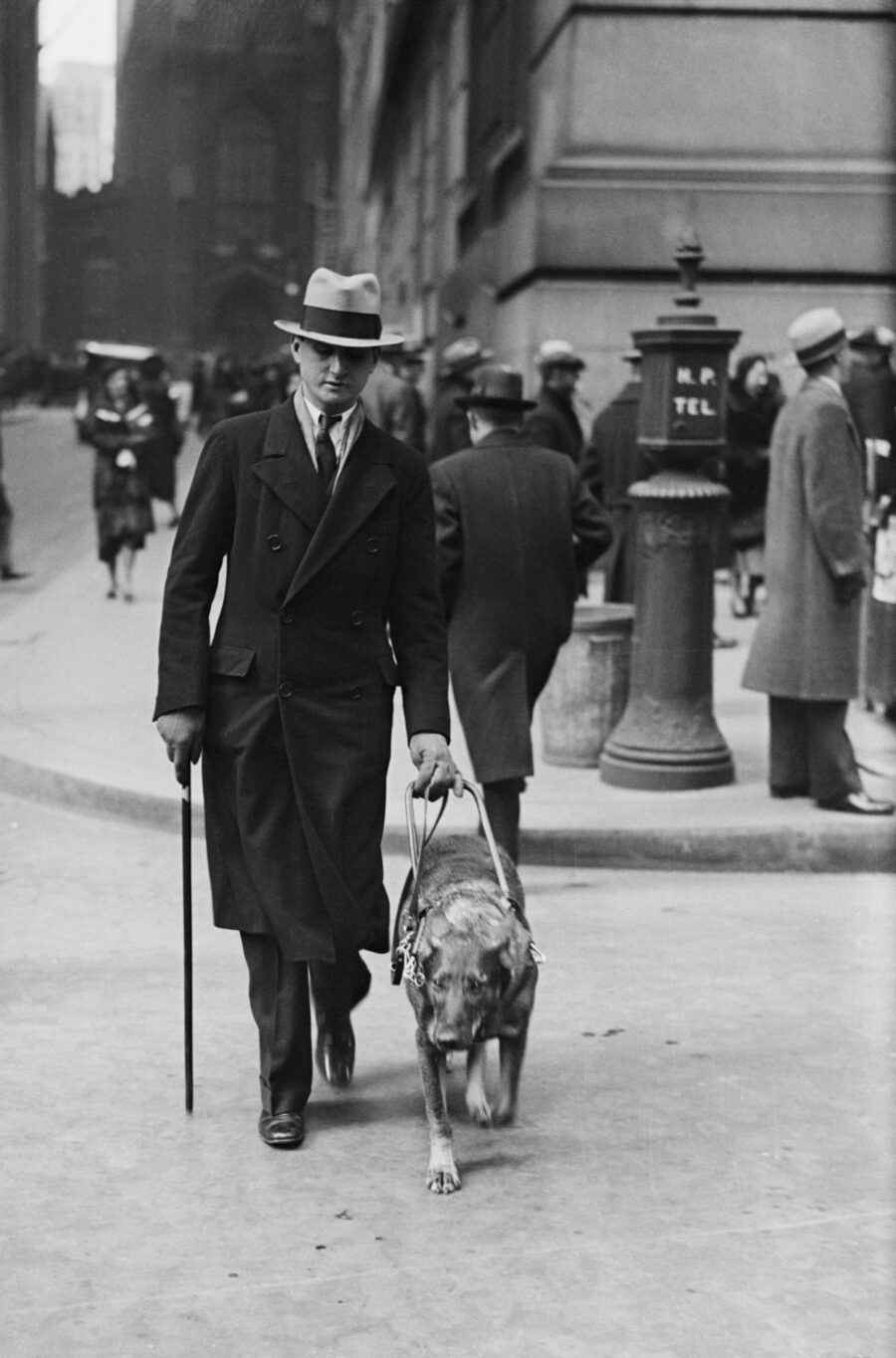
Long History: People have used dogs for help for a very long time. Art from ancient Rome andChina shows dogs leading people who were blind. Stories from the Middle Ages also describedogs guiding their handlers.
-
First Formal Dog Guide School: The modern guide dog story, begins during the First World War.Many soldiers lost their sight from poison gas. In 1916, the first guide dog school opened inGermany to train dogs for these veterans.
-
Growth worldwide: The idea spread quickly, and schools were soon founded across Europe. In the late 1920s, an American living in Switzerland, trained a dog for a young man named MorrisFrank, who was blind. With his dog Buddy, Frank became the first American guide dog user andwent on to co-found The Seeing Eye in 1929, helping bring guide dog training to North America.
-
New roles: Today, service dogs do much more than guide the blind. They help people withmobility challenges, hearing loss, PTSD, autism, epilepsy, and diabetes. They can also work inplaces like schools, hospitals, retirement homes, funeral homes and courts, giving comfort andsupport to many people.
Frequently Asked Questions
Not all dogs — and not all service dogs — fit into one mold; each has unique strengths, needs, and ways of making a difference.
1Do you certify or register service dogs?
No. Ontario does not require certification for service animals. We focus on training and team readiness.
2Can you train emotional support animals (ESAs)?
We can teach life-skills and manners, but ESAs are not service animals under Ontario’s accessibility standards because they are not task-trained. Access rights differ.
3Can any dog become a service dog?
Not every dog is suited for public-facing work. Our screening helps you determine fit early, and we’ll recommend alternative roles if appropriate. These roles can include at-home service work, or a career change.
4What about public-access tests?
We have a third party come in to conduct public access testing. Our Public Access Test is modelled after the British Columbia Public Access Test.
5Do you offer remote coaching?
Yes, many coaching sessions can be virtual with in-person fieldwork as skills progress.
6How long does this process take?
This whole process takes anywhere from one year to a two years before graduating.
7How much does service dog coaching typically cost?
Costs will vary based on where the team begins their journey.
The baseline cost start to finish for a full service dog coaching plan is $11,000–18,000 total over the course of 1-2 years.
Click here
8What is the cost at Unleashed?
We understand that cost is a major concern for families, and we strive to make our programs as accessible as possible. Your situation should not isolate you from the rest, but instead support you and meet you where you are. You don't need to pay additional costs, but you will need to put in more practice and commitment than the average pet home.
Program placement and pricing depend largely on the time and daily practice you can commit with your service dog (SD).
We recommend combining our group programs with private lessons or fast‑forward sessions so your team gets the focused support needed to reach the required passing score at each level. Some teams will need more support, others less. Regular fees apply as they would for any student. Pay as you go.
9Where is the application form?
Here is a link to the application form.
Form
10Is your facility accessible?
Our facility offers partial accessibility. We have a ramp from the parking lot, designated accessible parking, and double doors for easy entry.
At this time, our washroom does not accommodate wheelchairs and does not include a handrail. However, the nearest Tim Hortons (just a short distance away) has a fully accessible restroom.
If you’re planning a visit and would like assistance, please let us know—we’re happy to help however we can.
11Do you offer detection alert training for Service dogs (insulin, seizures etc.)?
We do not offer that service at this time. We are working towards it.
Sources
https://capdt.ca/wp-content/uploads/2021/05/Draft-Report-to-CAPDT-on-Service-Dogs-
March-29-2021.pdf?utm
https://www.veterans.gc.ca/en/contact-us/help/faqs/service-dog-pilot-study?utm
https://colleendell.com/
∙https://www.igdf.org.uk/guide-dogs/history-of-guide-dogs/
Application Form
Step one to this process no matter age or skill set of your dog is the application.